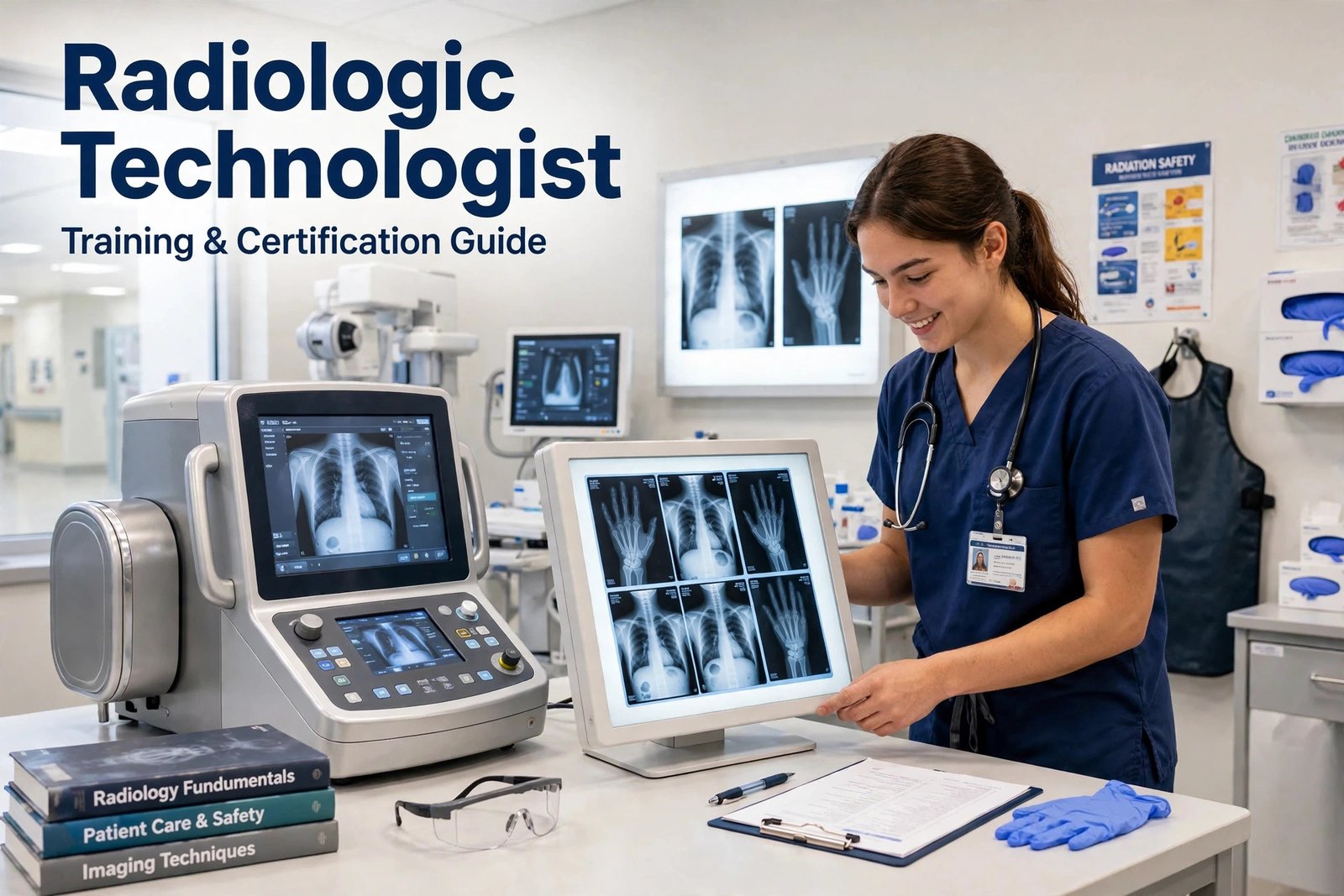
Every broken bone, chest infection, and suspected tumor starts with an image, and radiologic technologists are the professionals who create those images. Often called rad techs or X-ray technologists, they operate diagnostic imaging equipment, position patients with precision, and protect everyone in the room from unnecessary radiation exposure. It is a technical, hands-on career with a clear training path: complete an accredited radiography program, earn national certification, get licensed in your state, and start working. Most people finish the whole process in about two years. Here is exactly how radiologic technologist programs and certification work, and how to plan your route.
What Does a Radiologic Technologist Do?
Radiologic technologists perform diagnostic imaging examinations and administer radiation therapy in some specialized roles, but the core job that most people mean is diagnostic radiography: taking X-ray images that physicians use to diagnose illness and injury. Daily work includes preparing and positioning patients, setting exposure techniques, operating fixed and portable X-ray units, practicing radiation safety, evaluating image quality, and keeping patient records. Technologists work in hospitals, outpatient imaging centers, physician offices, urgent care centers, and mobile imaging services.
Radiography is also a platform career. With additional training and certification, technologists move into computed tomography (CT), magnetic resonance imaging (MRI), mammography, cardiac and vascular interventional imaging, and bone densitometry. Many senior technologists become supervisors, department managers, educators, or imaging informatics (PACS) specialists.
Step 1: Choose an Accredited Radiologic Technologist Program
Your program must be properly accredited, because accreditation is the gateway to certification and licensure. Radiography programs are typically accredited by the Joint Review Committee on Education in Radiologic Technology, known as the JRCERT. Graduating from a JRCERT-accredited (or otherwise ARRT-recognized) program is what makes you eligible to take the national certification exam.
Programs come in three main formats:
- Certificate programs, often hospital-based, generally run 12 to 24 months and are designed for people who already hold a degree or significant college credit.
- Associate degree programs, the most common route, take about two years at community colleges and technical schools and combine imaging coursework with general education.
- Bachelor’s degree programs, offered by universities over four years, suit students aiming at management, education, or advanced modalities later.
Whichever format you choose, expect coursework in human anatomy and physiology, radiation physics, image production and evaluation, patient care, medical terminology, and radiation protection, together with extensive supervised clinical rotations in real imaging departments. Admission is usually competitive and may require prerequisite science courses, a minimum GPA, and an interview.
Step 2: Earn ARRT Certification
The national credential for this field is administered by the American Registry of Radiologic Technologists (ARRT). After completing an approved educational program, you apply for ARRT certification and registration in radiography. Certification has three pillars: education (graduating from an accepted program), ethics (meeting character standards, including disclosing certain legal issues), and examination (passing the ARRT radiography exam, a comprehensive computer-based test of imaging knowledge and practice).
Once certified, you maintain your credential through biennial continuing education and annual registration renewal. ARRT also offers postprimary credentials in areas such as CT, MRI, and mammography, which require documented clinical experience and, in some cases, structured education, followed by another exam. Those additional credentials are how technologists raise their skill level and their pay.
Step 3: Get Your State License
Most states also license radiologic technologists, and you generally need a state license in addition to ARRT certification to work legally. In many states, the licensing process builds directly on ARRT certification, sometimes using the ARRT exam as the state exam. A smaller number of states have their own additional requirements or limited-scope licenses for technicians who perform only certain examinations. Because rules differ, check the requirements of the state where you plan to work before you graduate, and confirm whether your program’s state approval matches.
Costs and Timeline: What to Expect
The associate degree route at a public community college is usually the least expensive way in, while private and university programs cost more. Beyond tuition, plan for textbooks, uniforms and lead markers, clinical travel, exam application fees, and state licensing fees. Radiography students can apply for federal financial aid through the FAFSA, and many hospitals offer tuition support or sign-on incentives for imaging staff because technologists are in steady demand.
On time, a certificate or associate pathway typically takes about two years of full-time study, including clinical rotations. Part-time options exist but stretch the calendar. After graduation, most students schedule the ARRT exam within a few months and apply for state licensure in parallel, so a realistic school-to-working timeline is roughly two to two and a half years.
Career Growth After Your First Job
Entry-level technologists usually start with general radiography, including evening, weekend, or on-call shifts in hospital settings. From there, growth comes from specialization and responsibility. CT and MRI technologists, interventional specialists, and mammographers hold additional ARRT credentials and command stronger positions. Others grow into lead technologist, quality and safety, education, or department leadership roles.
Some technologists eventually decide they want to diagnose and treat patients rather than image them, and use their imaging background as a springboard to advanced clinical careers. If that future interests you, read our guide on how to become a physician assistant, since patient-care experience as a technologist strengthens a PA school application. And if you would rather enter medical imaging through a shorter credential first, our roundup of healthcare certifications that pay well compares faster allied-health entry points.
Frequently Asked Questions
Is ARRT certification really required to work as a rad tech?
In practice, yes for most jobs. Most states require licensure, most licensing systems are built around ARRT certification, and most employers list ARRT registration as a condition of employment. Treat certification as a required step, not an optional extra.
What is the difference between a radiologic technologist and a radiologist?
A radiologist is a physician, a medical doctor who completes medical school and residency and who interprets images and issues diagnoses. A radiologic technologist is the allied-health professional who performs the imaging examination and cares for the patient during it.
Can I specialize in MRI or CT right away?
ARRT offers primary pathways into some disciplines, including MRI, but the most common route is to certify first in radiography, gain clinical experience, then earn a postprimary credential in CT, MRI, or mammography. Employers often support this progression because specialized technologists are harder to hire.
Key Takeaways
- Complete a JRCERT-accredited radiography program; the associate degree is the most common route and takes about two years.
- Pass the ARRT certification exam in radiography and meet ARRT ethics and education requirements.
- Obtain your state license where required; most states build licensure on ARRT certification.
- Budget for tuition plus books, uniforms, exam, and licensing fees, and use FAFSA aid where you qualify.
- Grow your career with postprimary credentials in CT, MRI, or mammography, or move toward leadership, education, or advanced clinical roles.