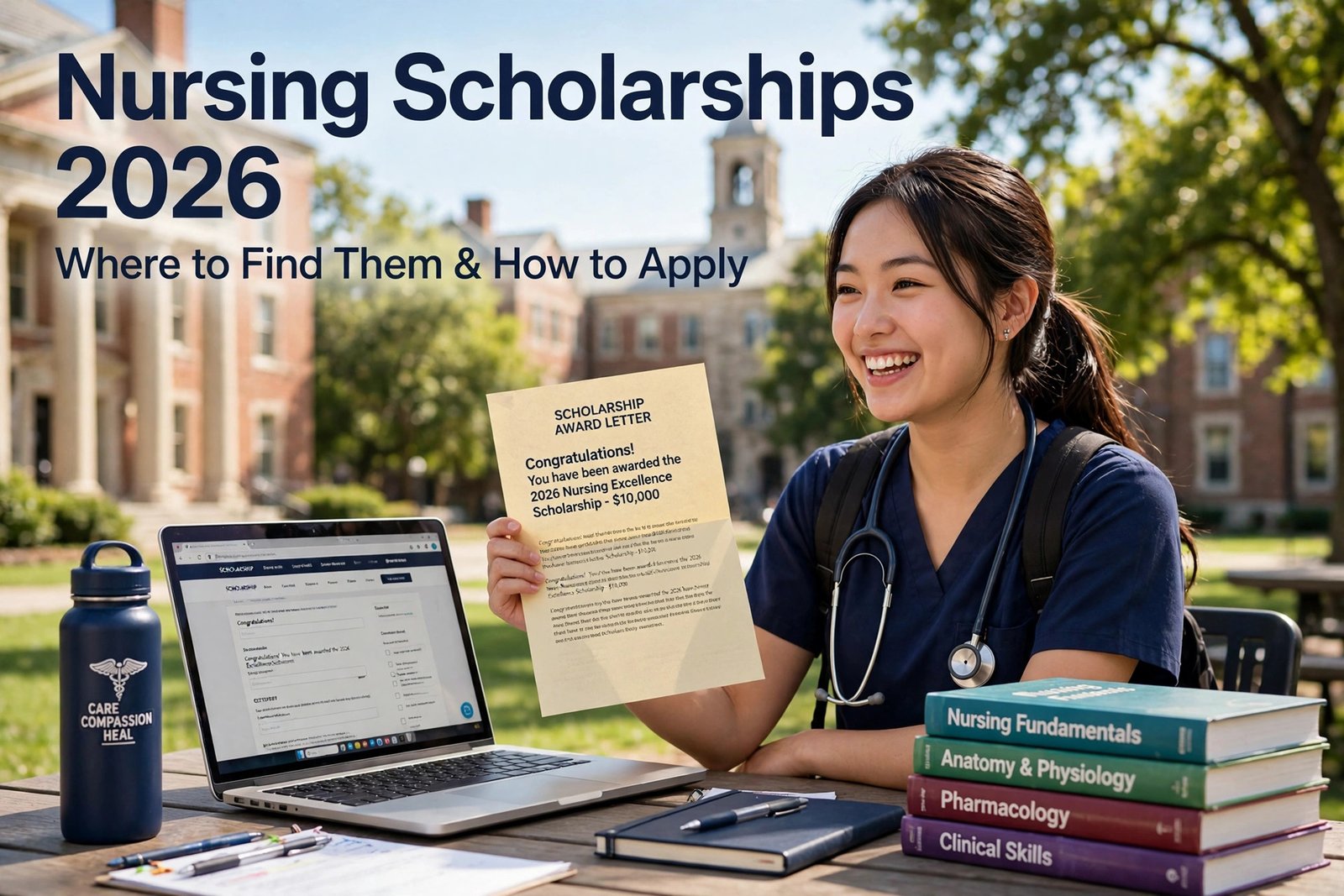
Nursing school is a smart investment, but tuition, fees, books, uniforms, and clinical costs add up fast. The good news is that nursing students have access to an unusually wide range of scholarships, grants, and service-commitment programs, because the United States needs more nurses and governments, hospitals, and foundations are willing to pay to train them. Scholarships are free money that does not have to be repaid, which makes them the first place to look before you borrow a single dollar. This guide to nursing scholarships in 2026 explains the biggest legitimate sources, where to search, and how to actually win them.
Start With the FAFSA and Free Federal and State Aid
Before hunting for private scholarships, file the Free Application for Federal Student Aid (FAFSA) at studentaid.gov. The FAFSA is the key that unlocks Pell Grants for undergraduate students with financial need, federal student loans on the best available terms, and work-study jobs. Many states and colleges also use it for their own grant and scholarship awards. File early, because some state and school funds run out on a first-come basis.
If you are still planning your route into the profession, read our walkthrough on how to become a registered nurse so you understand the program types, timelines, and total costs you are trying to fund.
Federal Nursing Scholarships: The HRSA Nurse Corps
The flagship federal award for nursing students is the Nurse Corps Scholarship Program, run by the Health Resources and Services Administration (HRSA). It is aimed at students accepted to or enrolled in nursing degree programs, including diploma, associate, bachelor’s, and graduate programs. In exchange for a service commitment, the scholarship pays tuition and eligible fees, covers other reasonable educational costs, and provides a monthly living stipend.
The commitment is real: after graduating, Nurse Corps scholars work full-time for a minimum of two years at a health care facility with a critical shortage of nurses, known as a Critical Shortage Facility, located in a Health Professional Shortage Area. There are options to extend service for additional support. Because of the stipend and full tuition coverage, competition is significant, and preference goes to students with the greatest financial need. HRSA also runs the Nurse Corps Loan Repayment Program, which helps practicing nurses pay off existing loans in exchange for service at shortage facilities.
Health professions scholarships connected to military service and the Department of Veterans Affairs are further federal options, each with its own eligibility rules and application windows.
School-Based Scholarships: Often Your Biggest Source
For many students, the largest scholarship dollars come from the college or university itself. Schools award institutional scholarships based on merit, financial need, or both, and nursing departments often control dedicated funds donated by alumni, hospitals, and local foundations, reserved specifically for nursing students. Some of these awards are automatic with admission; others require a separate application that students commonly overlook.
Make the financial aid office and your nursing department your first two stops. Ask directly: “Which scholarships are nursing students here eligible for, and what are the deadlines?” New-student and continuing-student awards, emergency grants, and clinical-excellence scholarships all hide in departmental lists that never appear on national search sites.
Associations, Foundations, and Community Scholarships
Professional organizations and foundations form the next layer. Nursing associations at the national and state level, including organizations affiliated with the American Association of Colleges of Nursing and the National League for Nursing, sponsor or publicize awards for students at various levels. Specialty organizations, from critical care to school nursing, offer scholarships to students who plan to enter their field. Hospital foundations, community foundations in your city or county, civic groups, and employers (including your own or a parent’s employer) are also productive sources.
Local awards deserve special attention: a community foundation scholarship limited to one county, or a hospital auxiliary award for local students, may attract a fraction of the applications a national scholarship receives, improving your odds considerably.
Employer and Hospital Tuition Programs
Many hospitals and health systems are so short of nurses that they help pay for school up front. Common arrangements include tuition reimbursement for employees (including those working as nursing assistants or unit clerks while they study), employer-paid tuition programs through partner schools, and scholarships tied to a commitment to work at the facility after graduation. If you already work in healthcare in any role, ask human resources what education benefits exist before you enroll anywhere else. Even part-time healthcare jobs sometimes carry meaningful tuition benefits.
Where to Search and How to Organize Your Hunt
Use free, reputable search tools: the U.S. Department of Labor’s CareerOneStop scholarship finder, your state higher education agency’s website, and your college’s scholarship portal. Build a simple tracker, even a spreadsheet, listing each scholarship, its eligibility rules, award size, deadline, and required materials, and work backward from deadlines so essays and recommendation letters never become last-minute scrambles.
Scholarships rarely cover one hundred percent of nursing school costs, so plan your funding as a stack: free aid first, then federal loans within sensible limits. When you reach the borrowing step, our guide to student loans for nursing and medical school shows how to compare loan types and borrow only what you truly need.
How to Win More Scholarships and Avoid Scams
Strong applications share habits: they answer the exact prompt, connect your story to nursing specifically, quantify your experience (volunteer hours, caregiving, healthcare work), and come with recommendation letters from people who know your work. Apply to many awards, including small ones; several small scholarships add up to a semester of tuition.
Finally, protect yourself. Legitimate scholarships never charge an application fee, never “guarantee” winnings, and never ask for bank details or your Social Security number through an unsolicited email. If an offer pressures you to act immediately or pay to claim a prize, it is a scam, full stop.
Frequently Asked Questions
Do nursing scholarships have to be repaid?
No. Scholarships and grants are gift aid. The exception is service-commitment programs like the Nurse Corps Scholarship, where the money is not repaid in cash but you owe a period of full-time work at a shortage facility after graduation.
When should I apply for nursing scholarships?
Applications run all year, but many major deadlines fall in the fall and spring before the academic year you are funding. Start searching the moment you apply to nursing programs, and renew your FAFSA every year you are enrolled.
Can LPN, ADN, BSN, and graduate nursing students all find scholarships?
Yes. Different programs target different levels, from practical nursing students to doctoral candidates. The Nurse Corps and many school and association awards span multiple levels, so check each listing’s eligibility rules carefully.
Key Takeaways
- File the FAFSA first; it unlocks federal grants, state aid, and most school-based awards.
- The HRSA Nurse Corps Scholarship can cover tuition plus a living stipend in exchange for service at a critical shortage facility.
- Your school and nursing department are often the richest and least competitive scholarship sources; ask directly.
- Associations, community foundations, and hospital employers add another layer of funding, especially local awards.
- Never pay a fee or share sensitive data for a scholarship application; legitimate aid is always free to apply for.