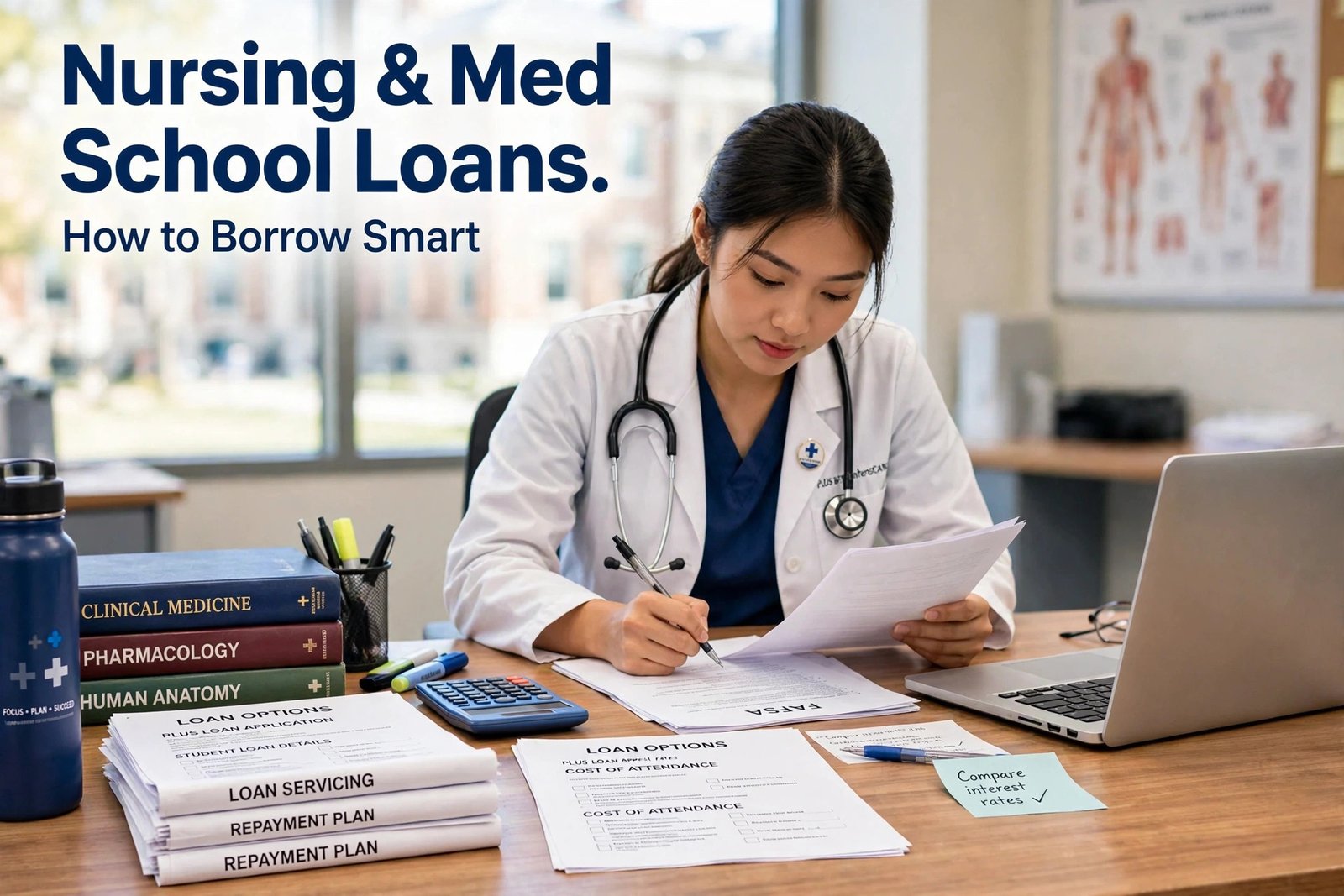
Nursing and medical training are among the most valuable degrees you can earn, but they are not cheap. Even after grants and scholarships, many students need loans to cover tuition, fees, equipment, and living costs. The goal is not to avoid borrowing; it is to borrow the right loans, in the right order, in the smallest amount that gets you through school. This guide explains how student loans for nursing and medical school work, from the FAFSA to loan types to repayment, so you graduate with debt you can comfortably retire.
Step One: Free Money and the FAFSA
Every borrowing plan starts with the FAFSA, the Free Application for Federal Student Aid at studentaid.gov. Filing it makes you eligible for grants, work-study, and, crucially, federal student loans, which almost always beat private loans on rates, protections, and repayment flexibility. Graduate and professional students, which includes medical students and graduate nursing students, are treated as independent for federal aid purposes.
Before looking at loan amounts, maximize gift aid. Our companion guide to scholarships for nursing students covers the Nurse Corps Scholarship, school awards, and other free funding that can shrink your borrowing before it starts.
Federal Direct Loans: Subsidized vs. Unsubsidized
The backbone of federal borrowing is the Direct Loan program. The two types undergraduate nursing students encounter are:
- Direct Subsidized Loans: Available to undergraduate students with demonstrated financial need. The government pays the interest while you are enrolled at least half-time, during the grace period, and during deferment. This is the cheapest federal loan; take it first.
- Direct Unsubsidized Loans: Available to undergraduate and graduate students regardless of need. Interest accrues from disbursement; if unpaid while you are in school, it capitalizes, meaning it is added to your principal and you pay interest on interest.
Federal loans have annual and lifetime (aggregate) limits set by law, varying by year in school and dependency status. Those limits are why medical students, whose programs cost far more than the unsubsidized limits allow, usually need the next loan on this list.
Grad PLUS Loans for Nursing Grad Students and Medical Students
Direct PLUS Loans for graduate and professional students, commonly called Grad PLUS loans, fill the gap between unsubsidized limits and your school’s full cost of attendance. Key features to understand:
- They require a credit check. You generally qualify unless you have an adverse credit history, and an eligible endorser (co-signer) can help if you do not qualify alone.
- You can borrow up to your cost of attendance minus other aid, which is why they are the workhorse loan for medical school and graduate nursing programs such as nurse practitioner and nurse anesthesia tracks.
- Interest rates are set by law each year, accrue from disbursement, and are higher than undergraduate loan rates. An origination fee is also deducted from each disbursement.
- They are still federal loans, so they carry federal protections and repayment options that private loans do not.
Students weighing a medical degree should pair this borrowing picture with admissions planning, because the school you choose affects both your match prospects and your total debt. Our guide to medical school admissions requirements explains what getting in involves.
Health-Professions-Specific Federal Loans
Beyond the main Direct Loan programs, the Health Resources and Services Administration (HRSA) funds campus-based loans through schools. Names to know include Health Professions Student Loans (HPSL), Loans for Disadvantaged Students (LDS), and Primary Care Loans (PCL), the last of which supports medical students who commit to practicing primary care. These loans are need-based, limited by each school’s funding, and often carry favorable terms. Not every school participates, so ask your financial aid office whether HRSA loan funds are available to you.
Private Student Loans: The Last Resort
Private loans from banks, credit unions, and online lenders have a limited place: after federal options are exhausted, or to cover a small remaining gap. Approval and rates depend on your credit history and income (or a co-signer’s), rates can be variable, and you give up federal protections such as income-driven repayment, generous deferment, and loan forgiveness programs. If you use a private loan, compare multiple lenders, read the capitalization and repayment terms carefully, and borrow the minimum.
How to Borrow Smart: Five Rules
- Estimate the finish line, not just the semester: multiply your annual gap by the length of your program and look honestly at the total, which should produce a manageable payment on a typical starting healthcare salary.
- Take loans in order: grants and scholarships, then subsidized loans, then unsubsidized loans, then Grad PLUS, then private loans only if unavoidable.
- Borrow for needs, not lifestyle. Tuition, required fees, books, equipment, licensing, and modest living costs belong in the budget; upgrades do not.
- Pay in-school interest if you possibly can. Even small payments on unsubsidized and PLUS loans prevent capitalization and save money over the loan’s life.
- Track every loan in one place. Your federal loan record lives at studentaid.gov; check it each semester so the total never surprises you.
Repayment After Graduation
Most federal Direct Loans give you a six-month grace period after you graduate or drop below half-time enrollment before payments begin. The default option is the Standard Repayment Plan, which pays the loan off in ten years. Federal borrowers can also choose income-driven repayment plans that cap payments at a percentage of discretionary income, which can help during residency or your first nursing job, though lower monthly payments mean more interest over time.
Healthcare workers should also know about Public Service Loan Forgiveness (PSLF). If you work full-time for a qualifying employer, which includes government and most nonprofit hospitals and health systems, and make 120 qualifying payments under an eligible plan, the remaining federal loan balance can be forgiven. State loan repayment programs and the Nurse Corps Loan Repayment Program offer separate paths for clinicians serving in shortage areas. Federal rules change over time, so confirm current options at studentaid.gov.
Frequently Asked Questions
Can undergraduate nursing students get subsidized loans?
Yes, if they demonstrate financial need through the FAFSA. Subsidized Direct Loans are for undergraduates; graduate nursing students rely on unsubsidized Direct Loans and Grad PLUS instead.
How much can medical students borrow from the federal government?
Between unsubsidized Direct Loans and Grad PLUS loans, medical students can generally finance up to their school’s full cost of attendance with federal loans, subject to annual and aggregate program limits and a PLUS credit check.
Should I pay interest while I am in school?
If your budget allows even modest interest payments, yes. Preventing capitalization on unsubsidized and PLUS loans lowers your total repayment cost substantially over a long term.
Key Takeaways
- File the FAFSA every year; it is the gateway to all federal aid and the best loan terms available.
- Borrow in order: subsidized, then unsubsidized, then Grad PLUS, and treat private loans as a last resort.
- Ask your school about HRSA health professions loans, which are limited but favorable.
- Watch the program total, not just the semester amount, and pay in-school interest when you can.
- Plan repayment early: grace periods, income-driven plans, and PSLF for nonprofit hospital employees can all work in your favor.